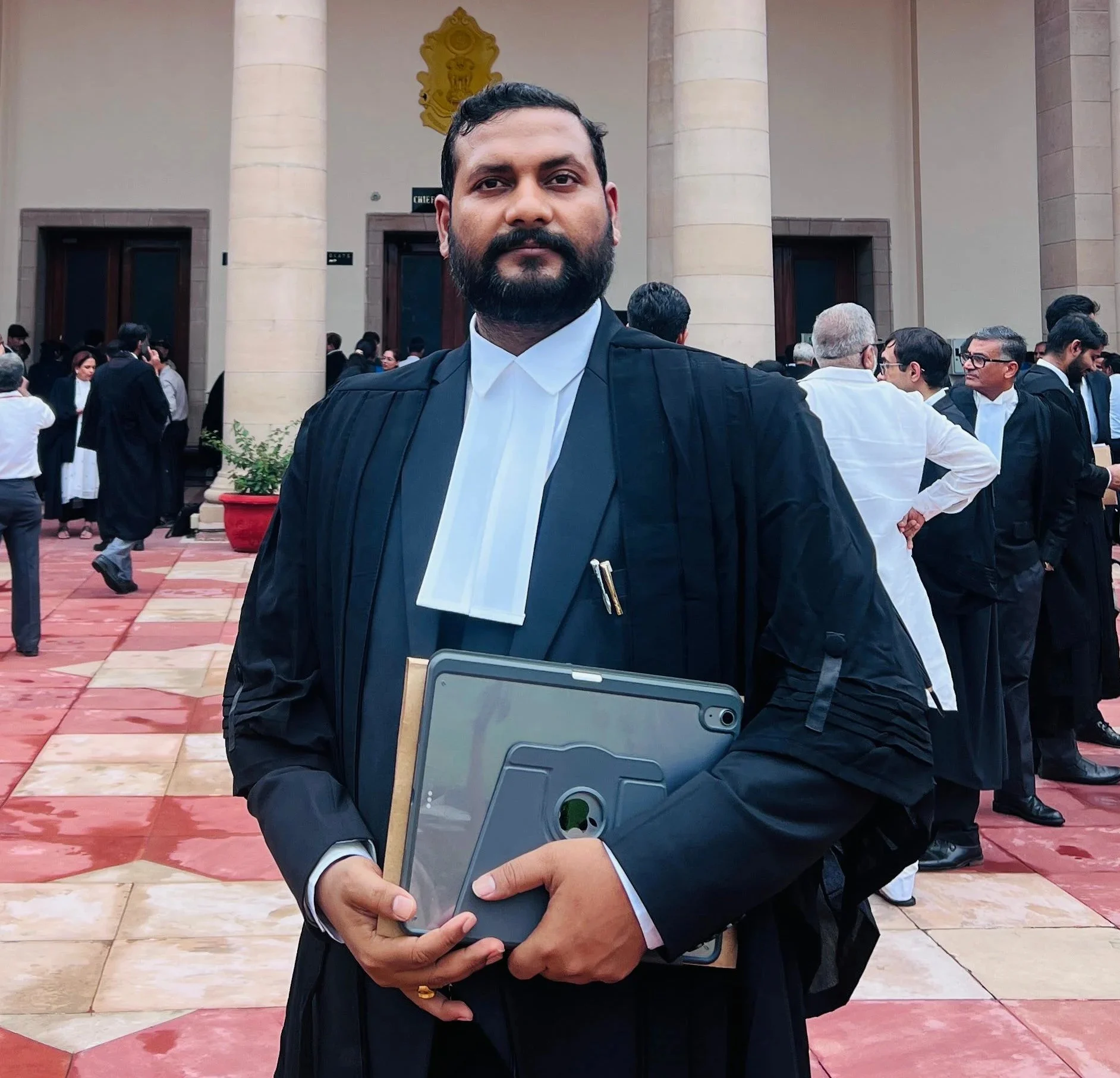
Best Divorce Lawyer in Delhi NCR for Mutual Consent Divorce
Wedding ends with divorce but how you divorce decides how much conflict, cost and emotional trauma you both take forward. Opting for mutual consent divorce is the less bitter way but even then, couples in Delhi NCR wonder about proceedings in court, cooling-off period, terms of settlement, custody of children, maintenance, and documents.
Mutual consent divorce is filing a divorce petition by both husband and wife together where they tell the court that they want to live separately. Most Hindu marriages in India are filed under Section 13B of Hindu Marriage Act, 1955. Divorce by mutual consent for court marriages or marriages between different religions is governed by the Special Marriage Act.
Issues like maintenance, who keeps the car, where children stay, jewellery, who was at fault and scores of other undecided factors matter a lot to Delhi couples from Delhi, New Delhi, Noida, Ghaziabad, Gurugram, Faridabad and surrounding areas.
Choosing LEGAL365 or the best divorce lawyer in Delhi NCR for mutual consent divorce is about finding someone who can minimise hostility, draft settlement properly, file petition accurately, and guide you through the process tactfully, both legally and practically.
At LEGAL365, we have been helping clients with family law issues, matrimonial disputes and divorce matters by mutual consent. Visit LEGAL365 for trusted legal help in Delhi NCR and India.
Why This Issue Matters in Delhi NCR in 2026
India is home to many modern couples. Couples who move out for jobs, stay away from their parents, live in rented apartments, share EMI for the flat or car, divide expenses, buy laptops together and even have kids who study elsewhere. When a marriage breaks down between two such Delhi residents, it turns into a stressful nightmare – legally and financially.
Divorce, maintenance, custody, domestic violence, dowry allegations and settlement are common cases in family courts in Delhi, Ghaziabad, Noida, Gurugram and Faridabad. Don’t let a mutual consent divorce go casual, or you may fight later about who keeps the car, alimony payments, child visitation rights, stridhan, balance flats or lover apartments, and withdrawal of cases.
Fix things right the first time with a proper divorce petition drafted by a good lawyer.
Draft poorly and you open the gates for future legal battles.
Clients in Delhi and NCR in 2026 are smarter. They run a search before meeting the lawyer. They want privacy and quick answers. They want reasonable terms and clear legal advice. A good lawyer doesn’t force you to fight on every issue. A good divorce lawyer will first examine if settlement is viable, if both spouses genuinely agree to end the marriage, and whether the terms are legally sustainable.
Quick Facts Box
| Point | Practical Meaning |
|---|---|
| Mutual consent divorce needs agreement of both spouses | Don’t expect mutual consent divorce if your spouse does not agree |
| Separation period is generally required | You have lived apart for a minimum period under the applicable law |
| Settlement terms must be clear | Write down alimony amount, custody terms, jewellery handed over, household articles, pending complaints, FIR/case numbers, domestic violence cases, maintenance under section 125CRPC or BNSS etc. |
| Two motions are usually involved | Mutual consent divorce has first motion and second motion |
| Cooling-off period may be waived in suitable cases | Ask the court to waive the delay based on facts |
| Child welfare remains important | Courts cannot allow parents to settle custody like a business deal |
| Legal drafting matters | Vague terms in your settlement can cause future battles |
What Is Mutual Consent Divorce?
Both husband and wife tell the court that they want to separate by mutual consent. It is not on divorce paper signed at home. Civil court has to approve your decision.
Hindu couples file under Section 13B of Hindu Marriage Act, 1955. For marriages registered under Special Marriage Act “mutual consent divorces”, provisions of Special Marriage Act apply. Christian, Muslim and Parsi divorces by mutual consent have their own laws or routes.
Mutual consent divorce simply means both parties agree to divorce and agree to settle issues amicably.
The settlement deals with permanent alimony, maintenance money during divorce proceedings, child custody, visitation, return of jewellery, household items, withdrawal of pending complaints/FIR/cases, ongoing DV cases, Section 125 CRPC or BNSS maintenance cases pending against spouse, and any other case either spouse has filed against the other.
The Legal Framework for Mutual Consent Divorce in India
Divorce by mutual consent is primarily governed by personal law of the married couple. Hindu couples file under Hindu Marriage Act, 1955. Christian, Muslim, Sikh and Parsi couples may have different procedures and laws for divorce.
India does not have a uniform divorce law. Only Special Marriage Act allows different religion couples to get married and divorce under the same legislation.
Family Courts have jurisdiction over most divorce matters. You can file divorce petition in the Family Court having jurisdiction over the area where:
- Spouses were married
- Spouses last lived together
- Wife is living in
- Or as permitted by law
Jurisdictional laws shouldn’t be messed up. Pick the wrong Family Court and you lose precious time.
First Motion and Second Motion
Mutual consent divorces involve two recordings called motions. In first motion, parties tell the court that they want divorce and have settled terms privately.
Second motion confirms that you both still agree to divorce. Court checks consent and family judge passes the divorce decree.
There is a waiting period called cooling-off period between the two motions. Courts can waive waiting period where settlement is full, parties have separated for a long time already, and there is little chance of reconciliation.
Each case is different. So cooling-off waiver is based on facts. Courts can’t waive it as a rule.
Who Needs This Guidance?
- Any couple planning to divorce by mutual consent.
- Any couple who has already separated and lives apart.
- Families who want to negotiate a settlement.
- NRIs facing divorce in India.
- Working couples based in Delhi NCR.
- Clients with matrimonial disputes and pending cases who now want a decree of divorce.
Clients come to me when it is already late. Police cases are filed. Maintenance demanded. Domestic violence petitions are granted. Sometimes a legal notice is sent by one party.
Mutual consent divorce can still work if you both finally agree to a settlement.
Don’t let marriage troubles follow you after divorce. Finalise everything legally and close all chapters for your peace of mind.
Step-by-Step Process for Mutual Consent Divorce
Stage 1: Consultation
Every divorce starts with a good conversation. I gather marriage date, separation date, place of marriage, place of residence, children’s details, pending cases (if any), financial terms, and reasons for settlement.
Stage 2: Discuss Settlement
Here is where most couples struggle. How much permanent alimony? Who pays monthly maintenance while divorce is pending? Who pays child expenses? How much schooling fees? Who can claim medical expenses? Who stays with children? Can visits be arranged during holidays? Is there jewellery given? Are there gold or cash gifts? Who keeps which flat or furniture? Who keeps the car? Who gets the deposit back from landlord? Which household items go to whom?
Both parties have to agree on every point. Leave nothing in ambiguity. So discuss carefully.
Once terms are fixed, I’ll draft the mutual consent divorce petition and settlement documents. Both parties read and sign these. We then file the petition in Family Court.
Stage 3: First Motion
Both parties will have to appear in Family Court in person. Your statements will be recorded. Judge will verify that consent is genuine and terms are settled.
After 6 weeks or the cooling-off period, parties have to attend second motion.
Stage 4: Second Motion
Similar to first motion, statements are recorded and divorce decree is granted.
Divorce decree is the final order of divorce you receive from court. Always keep a certified copy with you.
Documents and Evidence Checklist
Every case is different but here is a basic checklist of what’s normally required:
- Marriage certificate (if available)
- Evidence of marriage like marriage photos
- Address and ID proof of both husband and wife
- Any photo/photo ID
- Proof of separate residence (optional but recommended)
- Settlement terms in writing (can be exchanged through lawyer)
- Children’s details
- Pending case details (If you have filed something or something is pending against you, bring proof)
- Bank account for payment of alimony or settlement amount
- Proof of payment, return of jewellery, gold or any articles handed over
- Any legal notice previously sent, FIR/complaint filed or court orders received
Your lawyer may ask for more documents as per your circumstances.
Timelines, Practical Delays and Decision Windows
Can mutual consent divorce be completed in 1 month? Some people want quick divorces but the answer is no. If both parties are cooperative, documents ready, jurisdiction fixed, and settlement completed, process becomes smoother.
Delays happen when one party later changes terms. Sometimes alimony is not paid. Child custody becomes tricky. Or pending cases are not settled properly.
Courts can reduce delay by waiving cooling-off period but only if the case merits. You can request waiver through your lawyer but cannot demand it.
To conclude, time matters when you both decide to file mutual consent divorce. Don’t rush into court when terms are undecided. Once parties make statements in first motion, divorce cannot be stopped or withdrawn easily. Couples who do face higher risk of post-divorce conflicts.
Common Mistakes People Make
Some couples find a format online and sign vague agreements. Avoid that risk.
Some couples sign a mutual consent divorce settlement but don’t address pending complaints. If there’s domestic violence, maintenance, marriage alliance case (498A), police complaint, 377/BBA or any other civil or criminal proceeding, your settlement agreement must specify what happens to those cases.
Either they will be jointly withdrawn by both spouses. Or one spouse will take responsibility for withdrawal.
Otherwise the other spouse may complain to court later that my partner handled the case and took back false dowry allegations but didn’t tell me about the divorce.
Never sideline pending complaints in divorce.
Another common mistake is agreeing to alimony but forgetting to mention child expenses. Or agreeing to custody but forgetting about school fees, travelling expenses, festivities, or medical coverage.
Some file divorce in the wrong Family Court. Cash transactions for alimony or settlement without proof. Jewellery handed over without any receipt.
You see this because Indians think mc divorce is just a paper signing ceremony. It is not. File mc divorce through court, and you have a permanent legal record of your divorce.
Take it seriously. All clients make this mistake thinking they want quick divorce. The real objective should be a clean and final divorce.
Risks of Ignoring Proper Legal Advice
A sloppy mutual consent divorce petition can bounce back as a fresh case against you. Your spouse may come back saying you never paid alimony or monthly maintenance. One spouse may not show up for second motion.
You can’t force your spouse to return to India to attend court hearings. After divorce, visits may not be granted by spouse if custody terms are vague.
Past complaints don’t vanish because you signed a divorce paper. Once things go south between you two, it can get ugly real fast.
Terms like “full and final settlement” are nice but they mean nothing if you fail to document all claims in your settlement agreement.
“I paid ABC amount as permanent alimony and it will be full and final settlement of all my claims” sounds better. Decide payment amount, date, and mode of payment. Always mention “against which claims?”
If you are fighting over who keeps the car, whose fault it was or why you separated, mention those reasons in the petition too.
A divorce decree grants you the status of being single. It doesn’t nullify pending claims unless those claims are settled between you two and recorded by the judge.
Hence drafting matters.
When Should You Hire a Divorce Lawyer?
Contact a lawyer before you sign any settlement agreement, transfer money/property, give back jewellery, agree to child custody terms, or file for divorce.
You should consult a lawyer if your spouse lives in another city or country. If you both are not on talking terms. If there are pending DV or maintenance cases. If you have children. If you own property together or have loan liabilities. If the settlement payment is significant.
Don’t let damage occur. Consult early and avoid damage. Contact a lawyer when damage has happened and you need repairs.
How LEGAL365 Can Help
LEGAL365 can help you with advice on mutual consent divorce, drafting of settlements, filing of mc divorce petition in Family Court, reviewing documents, attending court on your behalf, and practical legal advice to close your matrimonial case.
Advocate BK Singh has helped clients with divorce by mutual consent, contested divorce cases, divorce compromises, protect rights during divorce proceedings, and handle sensitive family matters with dignity and less hostility. He aims to help men and women in Delhi NCR with legally safe exits from marriage.
DELHI NCR FAMILY COURT FILINGS INCLUDE Delhi Family Court, Ghaziabad Family Court, Noida Family Court, Gurugram Family Court, Faridabad Family Court and other nearby areas depending on jurisdiction.
Need help with mutual consent divorce in Delhi NCR? Call LEGAL365 or contact us online.
Frequently Asked Questions
1. Who is the best divorce lawyer in Delhi NCR?
There is no one best lawyer for everyone. The best lawyer for mutual consent divorce is someone who knows family law, legal drafting of settlement, guides you through court process, understands child custody issues, and has practical experience dealing with negotiations.
Pick someone who makes you understand the risks involved but does not guarantee unrealistic outcomes.
2. How long does divorce by mutual consent take in Delhi?
Depending on court roster, documents, both parties being cooperative, terms of settlement and cooling-off period, divorce ranges from 6-8 months.
Courts can waive cooling off period where case merits. Ask your lawyer to request waiver. He can’t force the court to waive.
3. Can divorce by mutual consent be done without both spouses going to court?
Yes and No. Both spouses have to initially file the divorce petition. In exceptional circumstances, court may allow video linkage or powers of attorney for spouses who are non-local (NERI or living abroad), after seeking permission from the court and proving the facts.
4. Is one year separation mandatory for mutual consent divorce?
The period of separation required depends on your law and facts. Under Hindu Marriage Act, parties are expected to prove they lived separately for the prescribed period of time before filing divorce petition.
5. Can we waive cooling-off period in mutual consent divorce?
Yes. India courts allow parties to waive cooling-off period where case merits. Court will check if parties have settled everything, are already living separately, and there is no chance of you two getting back together.
6. What all should be mentioned in mutual consent divorce settlement?
Remember to mention alimony, monthly maintenance, child custody and visitation rights, jewellery given during marriage, household items each spouse keeps, details of pending cases, future claims waived, payment schedule, and withdrawal of pending cases.
7. Can a spouse change his/her mind after first motion in mutual consent divorce?
Yes. Both parties have to agree to divorce until final order is granted by judge. If one spouse changes his mind and tells the judge that he or she does not consent to divorce, court will not grant you mutual consent divorce.
8. Is mutual consent divorce better than contested divorce?
In most cases, yes. You and your spouse avoids a bitter contested divorce. Fighting takes longer, costs more, and is emotionally draining. But both of you have to agree to divorce freely. Settlement terms must be clear and free from ambiguities.
9. Can I settle my pending 498A or domestic violence case with mutual consent divorce?
You can settle those matters in your divorce agreement but you both have to withdraw those cases separately following legal procedure. Your divorce decree does not automatically close pending criminal cases or DV complaints.
10. Do I need a lawyer for divorce by mutual consent?
Technically no. Parties can approach court on their own but you need a lawyer to check jurisdiction, legal drafting of your settlement, advise on documents, protect your settlement, and guide you through family court procedure in India. Divorce is not simple. Especially when kids, property, and loans are involved.
Final Thoughts
Divorce is never easy. But mutual consent divorce is not about losing. It is about two people who respect each other enough to part ways calmly.
If you settle right, both parties can walk away without burning bridges. If you file divorce correctly the first time, you avoid visiting lawyers later for lawsuits.
Hiring the best divorce lawyer in Delhi NCR for mutual consent divorce is your first step toward a dignified exit. Don’t sign or file anything until you first speak to a family law advocate.
Disclaimer
The contents of this article are intended to provide general legal information only. This article should not be construed as legal advice nor does it create a lawyer-client relationship.