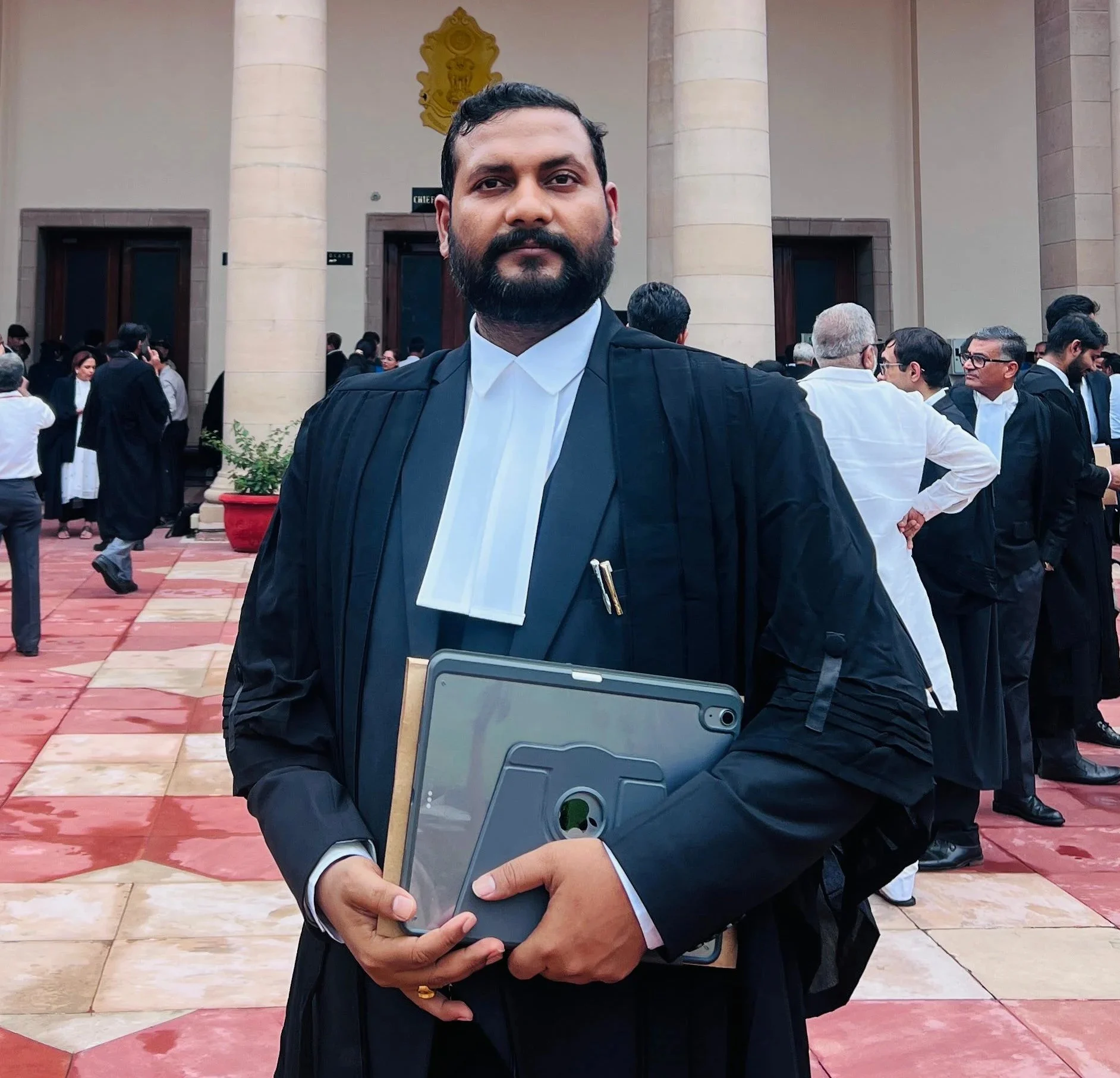
When Can a Company Director Be Personally Liable in a Cheque Bounce Case?
Company has issued a cheque to a supplier. The cheque is returned unpaid. Within days, every director whose name is listed at MCA is served with a legal notice – including those who had nothing to do with authorising the payment or operating the company’ cheque account.
Predictably, directors panic. They worry about criminal charges, arrest, damage to their business and personal liability for a debt that belongs to the company. Complainants have a separate issue: If the complaint names the wrong people (or forgets to include the company itself), an otherwise valid payment demand can be rejected for being legally defective.
Section 141 of the Negotiable Instruments Act, 1881 links directors to an offence committed by the company. But “the name of a person appearing in the records of the company as its director shall not by reason only of such appearance be deemed to be the director of the company for the purposes of this section.” In other words, liability is not automatic.
For a director to be prosecuted for a cheque bounce, the company must have committed an offence under section 138 of NI Act and the facts of section 141 must link the director to the business/activity or offence. Appearance at MCA records is not enough.
Responsibility is higher for the person who signed the cheque, company’s managing director and others who were actually directing the company’s affairs regarding the transaction in question. If a non-executive or independent director (or anyone who has resigned prior to the transaction) can prove he had no connection to the day-to-day affairs, such a person can object to his name being added to the complaint. If the complaint only makes general statements about his role, he may have a defence.
“The complaint, cheque, company account, statutory notice and contents of the complaint should be read together. The board meeting minutes, if any, and resignation letters (if any) should also be considered. Rarely does one document provide the answer to all questions,” suggests Advocate BK Singh.
Why Director Liability Matters Across India in 2026
Company cheques are still prevalent in contracts for supply agreements, property deals, business loans, franchises or vendor deals. One bounced cheque thus has the potential to lead to litigation between the company, the authorised signatory and multiple directors.
While the statute itself is uniform across India, such a complaint could be filed in Delhi, Noida, Gurugram, Mumbai, Bengaluru, Hyderabad, Chennai, Kolkata, Ahmedabad or anywhere else under Section 142(2) NI Act. The jurisdiction depends on where and how the cheque was deposited for encashment.
Attendance at courts across India can be a strain on working directors' time and travel budgets. Independent directors can face unnecessary reputational damage if they have no active role in the company. Suppliers risk forfeiting their time if they carelessly include every officer as a party without determining liability.
Role-mapping at the outset is therefore suggested by lawyer Advocate BK Singh. The MD, Signatory, Head of Finance, Nominee director and an individual who exited the company months before cannot all be sued as if they occupied the same legal position.
Quick Facts
- Section 138 NI Act pertains to dishonour of cheque for discharge of legally enforceable debt or liability.
- Section 141 pertains to offences by companies, firms and other associations of persons.
- The mere fact that a person is a Director does not automatically result in personal criminal liability.
- The legal entity, i.e. the company, should ordinarily be charged as an accused if the cheque was issued from its account.
- The signer of the cheque is more likely to be charged personally because of his direct involvement.
- Compounding is an option available by law under Section 147.
- Personal guarantees given by a director may result in separate contractual liability outside the cheque bounce complaint.
What Makes a Director Personally Liable?
The director can be held personally liable if the complaint alleged that he was conducting the company’s business on the date of the offence. He can also be held liable if he is connected with the offence by way of consent, connivance or neglect. Three positions need to be distinguished.
Advocate BK Singh has also written on the importance of not conflating this potential criminal liability under Section 141 with individual civil liability for the debt itself. If a company cheque bounces, that does not automatically make a director a debtor in regards to that instrument. He may become personally liable if he signed a personal guarantee, indemnity or some other type of undertaking.
Which Law Governs Company Cheque Bounce Cases?
Section 138 deals with cheque issued for discharge any debt or liability, when such cheque is presented to the bank within its validity period and the cheque is returned unpaid due to the reason mentioned within the Section. Thereafter, notice demanding payment is given by way of a demand notice within 30 days of receiving information from the bank. The drawer has 15 days from receipt of the notice to pay the amount mentioned in the cheque.
The company must ordinarily be an accusedWhere cheque is issued by drawee on account of a company, then the company is the principal drawer of the cheque. A complaint instituting vicarious liability against a director or authorized signatory must in normal circumstances also name the company as an accused. The Supreme Court has observed that Section 141 liability is premised on the fact that there is an offence committed by the company as principal. Citation: - Supreme Court of India , 20 25 INSC 831
Liability under Section 141(1)
The person who was responsible for the conduct of the company's business at the time in question. That person is also liable and can be found guilty alongside the company. A person guilty of an offence under this Act may defend himself by proving that he did not know and had no reason to suspect that an offence was being or was about to be committed and that he took all reasonable precautions to prevent the offence from being committed.
Documents and Evidence to Preserve
Director/complainant must retain:
- Original cheque or legible copy of the cheque
- Bank return memo and presentation slip
- Statutory notice, postage receipt and tracking details
- Contracts, bills, ledger and purchase orders
- Email/chat correspondence and receipt of payment
- Board resolutions and mandate for signing at bank
- MCA master information, Form DIR-12 and resignation details
- Minutes evidencing appointment of financial responsibility
BK Singh Advocate also analyses if cheque denoted as “security” was a liability on which holder could exercise his right on presentation. Readers facing such predicament can refer our article on criminal case against Bounced Security cheque.
What Happens If the Matter Is Ignored?
Disregarding a statutory notice eliminates the chance to put the facts on record or discuss a recorded solution at an early stage. Failure to attend a court summons is more severe. Arrest warrants can be issued, increasing litigation expenses and negative procedural impacts. Reputation with vendors can be impacted by the lengthy timeline of a complaint. Doing so can take time and attention away from running your business. Directors can be required to appear in the court in a city that may be out of their home base. Meanwhile, the complainant still walks away with the unpaid receivable. If convicted, a natural person can be sentenced to imprisonment for a term up to two years, or with fine which may extend to twice the amount of the cheque or both at the discretion of the court. Costs awarded can include compensation, appellate bonds and attorney fees.
When Should a Director Consult a Lawyer?
Legal Opinion should be taken at the earliest where-
- Cheque was not signed by director
- Officer resigned prior to the incidents in question.
- Complaint fails to name the company
- The allegations are merely a repeat of the statutory violations.
- The director was not in control of the finances nor the operations of the company.
- Personal Guarantee being conflated with Company liability.
- Summons/ warrant has been issued already.
- There are multiple complaints for same transaction.
- Company is undergoing insolvency proceedings.
- Intent to settle requires an order to be passed.
Whether the suitable reply can be made before the trial court, or in the settlement agreement or in rare cases before the High Court itself’ exercising its inherent powers under Section 528 of the Bharatiya Nagarik Suraksha Sanhita, 2023. Quashing is not straight forward if a director is only denying the allegations.
How LEGAL365 Can Help
LEGAL365 provides companies, directors, authorised signatories and complainants legal advice on Section 138 & 141 matters from Delhi NCR and other cities in India.
Advocate BK Singh will review the cheque, transaction, notice, company records and complaint and provide a view. This review separates out exposure for those who directly signed as well as vicarious liability, contractual liability and factual allegations that require proof at trial.
If representation is needed, Advocate BK Singh can help with drafting of notice response/complaint review, appearing in Court, bail-related issues, evidence evaluation, settlement agreements and any other remedy available to you legally maintain. Outcome will always vary depending on the documents, pleadings and facts presented in each case.
Frequently Asked Questions
1. Can all the directors be prosecuted when a cheque issued by the company bounces?
No. Individual culpability is required. Ordinarily, a director must be shown to have been involved in and responsible for the company’s business at the relevant time, or is linked through consent, connivance or neglect.
2. Does signing a cheque make a director personally liable?
Yes. Exposure is significant for company cheque signatories under Sections 138 and 141. Section 141 specifically relies on the subscription by the person charged. BK Singh advises checking authority, liability and statutory compliance.
3. Can a director who has resigned be prosecuted?
Resignation from a company does not automatically prevent prosecution under Section 138. A previous resignation may serve as a strong defence if supported by Form DIR-12, Board resolutions and other evidence. Liability will turn on the timing of the resignation and relevant dates under the law.
4. Is a “non-executive” or “independent director” immune?
Not automatically. The designation “independent director” does not provide immunity from Section 141. Factual allegations must be made and evidence of participation must be shown.
5. Can the directors be prosecuted if the company was not charged?
Generally not. If the cheque was issued by the company against its account, the company will always be the primary wrongdoer and should be charged as an accused.
6. Should notice be sent to every director?
The demand notice under Section 138 is issued to the drawer. The necessity for separate service of notice to every director and the adequacy of allegations related to other directors will depend on the contents of the complaint and facts of the case.
7. Can the directors be arrested by the police after receiving a cheque bounce notice?
Receiving a cheque bounce notice does not mean that the police will arrest you the next day. Criminal prosecution is usually initiated by filing a written complaint before the Magistrate. Advocate BK Singh can help you with any summons or warrant.
8. Can a company cheque bounce case be settled?
Yes. Such offences are compoundable under Section 147. Terms of payment, withdrawal from prosecution or compounding procedure and preservation of existing complaints should be documented.
9. Does a moratorium under IBC protect the directors from prosecution?
Not necessarily. Moratorium under IBC applies to the corporate debtor. Natural persons such as directors who could be liable for offence under Section 141 are analyzed separately.
10. Can proceedings be terminated against a director who was not involved?
Yes, in some cases. High Courts have supervisory jurisdiction if the complaint is legally defective. This could occur where required allegations are missing from the Complaint or submitted documents conclusively refute the allegations. BK Singh can help you determine if your case qualifies.
Conclusion
A company director is not personally liable in a cheque bounce case merely because their name appears in company records. Liability generally depends on whether the director signed the cheque, controlled the relevant business operations, or whether the offence occurred with their consent, connivance or neglect. The company must also ordinarily be named as the principal accused when the cheque was drawn from its bank account.Anyone facing a company cheque dishonour dispute may consult Advocate BK Singh at LEGAL365 for a careful assessment under Sections 138 and 141 of the Negotiable Instruments Act