📞 Free Consultation — +91-935-521-5699  |  info@legal365.co.in
Mon–Sat 9am–7pm|Book Now →
HomeServicesSupreme Court Lawyer
LEGAL365 · Advocate BK Singh · legal365.co.in
Top Supreme Court Lawyer in Delhi & India

At Legal365, our Lawyers for Supreme Court work, Advocate BK Singh offers supreme court lawyer services all over India. With 20+ years of legal experience. Visit us for free first consultation. legal365.co.in

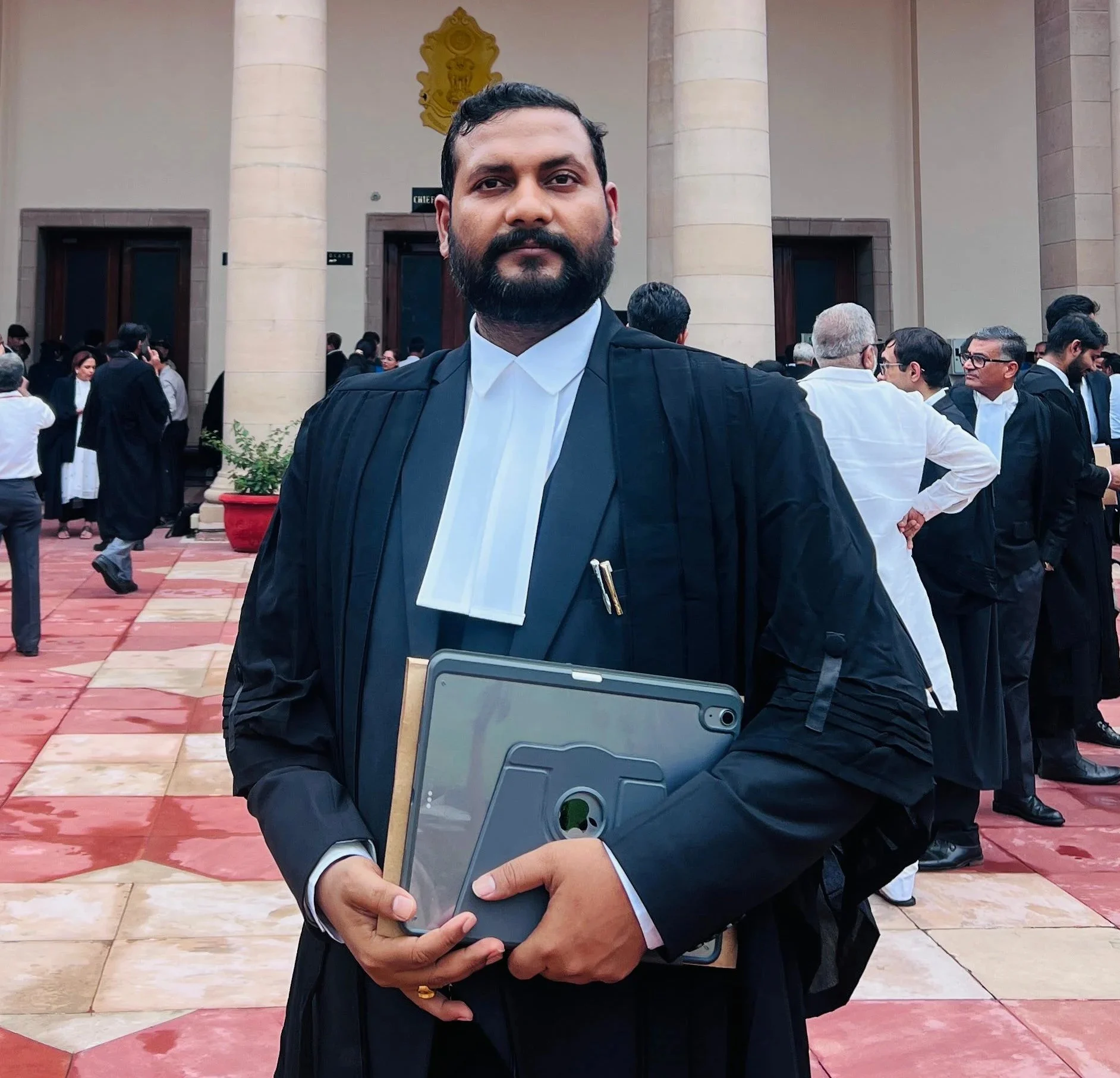
Experienced Supreme Court Lawyer at LEGAL365 - Advocate BK Singh

Advocate BK Singh founded LEGAL365 and offers Supreme Court lawyer services in Delhi and across all major Indian cities. Advocate BK Singh has practiced law before Delhi district courts, Delhi High Court and the Supreme Court of India for over 19+ years and brings hands-on focus and direct personal attention to every Supreme Court lawyer case at LEGAL365.

At LEGAL365, Supreme Court lawyer matters are handled by Advocate BK Singh directly - not a junior advocate or paralegal. Your documents are read, your matter is assessed, and you are advised honestly about your legal options. From day one at LEGAL365, Advocate BK Singh tells you straight what can realistically be done for your case - even when the realistic answer is different from what you hope for.

You are never left waiting for days or weeks to hear how your meeting went. Advocate BK Singh gives you legal options and an honest assessment of your Supreme Court lawyer matter at LEGAL365 starting with your first consultation.

"I personally handle every Supreme Court lawyer matter at LEGAL365 from start to finish. I do not outsource cases I accept. And I do not make unrealistic promises." -Advocate BK Singh, Founder at LEGAL365 · legal365.co.in

Supreme Court Lawyer Services - Advocate BK Singh at LEGAL365

LEGAL365 and Advocate BK Singh offer Supreme Court lawyer services tailored to the unique facts of your matter. Every court appearance, filing, document and application at LEGAL365 is built around your specific circumstances - the courts or tribunals involved, the applicable law, and the realistic goals you want to achieve.

Advocate BK Singh takes a bespoke approach to each Supreme Court lawyer case. One size-fits-all legal advice simply does not work. Your matter is different than countless other cases. Your circumstances, challenges, and legal issues are specific to you. That is why each Supreme Court lawyer service at LEGAL365 is tailored to your unique situation.

  • Representation at Supreme Court - SLPs, appeals, writ petitions, transfer petitions, urgent matters
  • Strategic review of your matter from day one at LEGAL365
  • Document review, petition drafting and Supreme Court filings done meticulously
  • Supreme Court legal opinion before filing - Includes pre-filing review of your case records
  • Immediate court applications for urgent relief when required
  • District Court and High Court appeals and revisions
  • Orders enforced - We will file contempt applications or take other legal action against non-compliance
  • Want to know if the Court will accept your matter? Let us review and advise - We assess issues of admission, interim relief, stay, limitation and maintainability at LEGAL365.

Legal representation at LEGAL365 means active management of your Supreme Court lawyer case. Advocate BK Singh does more than just show up for scheduled court dates. Every filing, hearing, application and matter at LEGAL365 is handled with complete preparation and a focus on your desired outcome.

How LEGAL365 Approaches Supreme Court Lawyer Matters

Realistic, honest evaluation of your Supreme Court lawyer case starts at LEGAL365. Advocate BK Singh reviews your facts, evaluates the strengths and weaknesses, and provides you with realistic assessment of likely outcomes and timeline. This includes telling you hard truths that you may not want to hear.

Once Advocate BK Singh has assessed your matter, only then will LEGAL365 create a tailor-made strategy for your Supreme Court lawyer case. This includes determining which courts have jurisdiction; evaluating what evidence you have and what evidence you may need; identifying the best legal arguments based on the facts and law; realistically evaluating if settlement is likely or even desirable at this stage; and recommending the sequencing of various applications and hearings to achieve the best result in the shortest possible time.

Advocate BK Singh stays accessible to you throughout your Supreme Court lawyer proceedings. Your calls will be returned. You will get case updates after important developments - hearings, orders, critical correspondence from the other party. Your strategy is revised as needed. And you never have to worry about your matter being stagnated at LEGAL365.

Transparent Fee Structure at LEGAL365

Fees for Supreme Court lawyer matters are discussed and agreed upfront at LEGAL365. There are no surprise fees. You decide whether to hire LEGAL365 after knowing the expected cost range in the free first consultation.

"Transparency is important in every aspect of LEGAL365 - the legal analysis, realistic outcomes, time-frames and fees. Clients can make better decisions when they have all the facts." - Advocate BK Singh, LEGAL365 · legal365.co.in

Courts for Supreme Court Lawyer Cases - Where LEGAL365 Has Practice

LEGAL365 and Advocate BK Singh handle Supreme Court lawyer matters originating from courts all over Delhi and India. Your Supreme Court matter will most likely be filed in the Supreme Court of India, but may originate from certain tribunals and appellate forums as listed below.

  • Delhi District Courts: civil courts, family courts, Criminal Sessions Courts, Magistrate courts
  • Delhi High Court: writ petitions (Under Art. 226), Criminal Appeals, Civil Revisions and First Appeals
  • Supreme Court of India: Includes SLPs, Constitutional matters, transfer petitions
  • National Consumer Disputes Redressal Commission (NCDRC)
  • National Company Law Tribunal (NCLT)/NCLAT
  • Debt Recovery Tribunal (DRT)/DRAT
  • National Green Tribunal (NGT)
  • RERA Authorities (Delhi, UP RERA, HRERA etc. )

LEGAL365 offers advisory, record review and drafting/filing support for Supreme Court lawyer matters from courts outside Delhi. Supreme Court Cases from any state in India can be handled by Advocate BK Singh at LEGAL365. Please visit legal365.co.in for more information on our reach across India.

About Advocate BK Singh - Founder of LEGAL365

Advocate BK Singh founded LEGAL365 on a single promise to clients. If you are facing a legal issue, you deserve a lawyer who will listen to you, tell you the truth, and fight for you. Not a firm that takes your money and leaves you waiting for months on end. Not an office where the senior most lawyer is always too busy to take your call.

Advocate BK Singh has over 19+ years of legal experience handling cases in Delhi at district courts, Delhi High Court and the Supreme Court of India. At LEGAL365, Advocate BK Singh has handled cases across 25 different practice areas. He has worked on Supreme Court lawyer matters ranging from advisory to high-end litigation including appearances before India's Supreme Court.

Clients of Advocate BK Singh appreciate his direct approach. He tells clients the truth from the very first meeting. He will tell you what can be done, what your risks are, and what you should realistically expect based on the facts of your case. In a profession filled with people overselling results, Advocate BK Singh's honesty has defined LEGAL365's client relationships.

  • Qualified and experienced Advocate - Bar Council of Delhi
  • Over 20 years of active law practice
  • Experience appears before Delhi district courts, Delhi High Court, Supreme Court of India
  • Handles Supreme Court lawyer matters involving all types of cases
  • File and oversee matters before DRT, NCLT, NGT, NCDRC, RERA etc.
  • Founder and Principal Advocate at LEGAL365 - legal365.co.in
  • Known for direct communication and honest advice

Find out more about Advocate BK Singh at legal365.co.in/advocate-bk-singh.html

Why Choose LEGAL365 for Supreme Court Lawyer Matters

There are plenty of law firms and lawyers offering Supreme Court lawyer services in Delhi and India. Why should you choose LEGAL365? Because you get direct access to Advocate BK Singh (no juniors, assistants or paralegals! ), specific practice area knowledge, honest assessments of your legal matter, prepared appearances at every stage of your case, and transparent fees with no surprises.

  • Speak directly to Advocate BK Singh at LEGAL365
  • Advocate BK Singh has specialist Supreme Court lawyer experience
  • Expect honest advice, even when you don't want to hear it
  • Your Supreme Court lawyer case will be actively managed by us
  • Fees are discussed and agreed before LEGAL365 starts working
  • We cover Supreme Court lawyer matters from every state in India
  • Your first consultation with Advocate BK Singh is free of charge
  • Call LEGAL365 or email us at +91-935-521-5699, info@legal365.co.in, legal365.co.in

LEGAL365 offers a free first consultation. You meet with Advocate BK Singh, explain your Supreme Court lawyer issue, get a realistic opinion on your rights and options, and leave with a clearer legal picture. There is never any obligation to hire LEGAL365 - not unless you want to.

"I offer a free first consultation at LEGAL365 because everyone should be able to access legal advice at least once without worrying about the cost." -Advocate BK Singh, LEGAL365 - legal365.co.in

LEGAL365's Supreme Court Lawyer Process - Step By Step

Step 1 - Free Consultation

Speak with Advocate BK Singh about your Supreme Court lawyer situation. Share your documents and provide details about your case. You will leave the free consultation knowing where you stand legally.

Step 2 - Decide to Engage LEGAL365

If you decide to hire LEGAL365, Advocate BK Singh works with you to build a comprehensive strategy for your Supreme Court lawyer matter. Fees are confirmed before work begins.

Step 3 - DOCUMENT READY, WE FILE.

LEGAL365 prepares and files all documents on your behalf. If urgent court protection is needed, we file an application for interim relief instantly. Advocate BK Singh appears in person at the first hearing and all critical hearing dates.

Step 4 - We Don't Just Show Up

LEGAL365 actively manages your Supreme Court lawyer case from start to finish. No matter how long your matter takes, Advocate BK Singh will appear at every required court hearing, file every required application, adjust your strategy as needed, and keep you updated along the way.

Step 5 - Resolution

Once your Supreme Court lawyer case is resolved, we advise on enforcement steps and monitor compliance. If the other party does not comply with the court order, LEGAL365 will take further legal action including contempt-of-court applications.

Call LEGAL365 on +91-935-521-5699, email us at info@legal365.co.in or visit legal365.co.in to schedule your free first consultation with Advocate BK Singh today.

Adv. BK Singh

Adv. BK Singh

View Profile

We have the experience and the expertise and the focus on delivering successful outcomes. We appear before the Supreme Court, High Courts and Tribunals.

Connect on LinkedIn
Free Legal Consultation

Speak directly with Advocate BK Singh at LEGAL365. First consultation is free - no commitment, no obligation at all.

Book Appointment -> Call Now
BK
Advocate BK Singh
Founder, LEGAL365 · 20+yrs · legal365.co.in
Quick Facts - LEGAL365
Service: Supreme Court Lawyer
Experience: 20+ Years
Courts: District, HC, SC
Coverage: Pan-India
Consultation: Free First Meeting
FAQs

Supreme Court Lawyer - 25 Questions Answered

Clear answers to frequently asked questions about Special Leave Petitions, Supreme Court appeals, writ petitions, review, transfer petitions, urgent relief and case filing by Advocate BK Singh at LEGAL365.

Ans. Consult a Supreme Court lawyer immediately after receiving an adverse High Court or tribunal judgment, a Supreme Court notice, a transfer-petition notice, or an order requiring urgent compliance. Early review is important because Supreme Court matters involve strict limitation, specialised drafting, certified copies, paper-book requirements, and possible interim-relief applications. Share the complete lower-court record and all relevant dates.
Ans. The Supreme Court exercises constitutional, appellate, special-leave, review, advisory, transfer, contempt, and other statutory jurisdictions. Common filings include Special Leave Petitions, civil and criminal appeals, writ petitions for enforcement of fundamental rights, transfer petitions, review petitions, curative petitions, contempt matters, and appeals provided by specific statutes. The correct proceeding depends on the challenged order and governing law.
Ans. An Advocate-on-Record, commonly called an AOR, is an advocate authorised under the Supreme Court Rules to file and act for a party before the Supreme Court. Other advocates and senior advocates may argue, but filing and procedural responsibility ordinarily rest with the AOR. Before starting a matter, confirm who will act as the AOR and who will settle or argue the case.
Ans. A Supreme Court matter is ordinarily filed and acted upon through an Advocate-on-Record, unless a party is permitted to appear and act in person under the applicable rules. A litigant may consult another advocate for strategy or drafting, but the filing, vakalatnama, curing of defects, and procedural responsibility must comply with the Supreme Court Rules and Registry requirements.
Ans. Bring the impugned judgment or order, certified copy if available, pleadings filed in lower courts, evidence and annexures, interim orders, review or recall applications, proof of service, case-status printouts, limitation dates, and a clear chronology. For criminal matters, include the FIR, charge sheet, bail orders, and custody details. Missing documents can delay advice and filing.
Ans. A Special Leave Petition, or SLP, asks the Supreme Court to grant special permission to appeal against a judgment, decree, determination, sentence, or order of a court or tribunal. Special leave is discretionary and is not granted merely because another view is possible. The petition must identify substantial legal or procedural errors and explain why Supreme Court intervention is justified.
Ans. An SLP seeks the Supreme Court’s discretionary permission to appeal under Article 136. A regular appeal proceeds where the Constitution or a statute provides an appeal as of right or after the required certificate or leave. If special leave is granted, the SLP is generally converted into an appeal. The filing route depends on the source and nature of the challenged order.
Ans. Not every adverse High Court order will justify Supreme Court interference. Maintainability, limitation, final or interim nature of the order, availability of review or another remedy, disputed facts, and the importance of the legal issue must be examined. The Supreme Court’s special-leave jurisdiction is discretionary, so the petition should demonstrate more than ordinary disagreement with the result.
Ans. Article 32 permits a person to approach the Supreme Court for enforcement of fundamental rights. It is not a general substitute for every civil, criminal, service, contractual, or statutory remedy. The petition must identify the fundamental right allegedly violated, the responsible public authority or legally relevant actor, the facts supporting the violation, and why Supreme Court relief is appropriate.
Ans. A transfer petition asks the Supreme Court to transfer a case from one state to another or between competent courts where the governing law permits. Transfer requests commonly arise in matrimonial, civil, and criminal proceedings. The applicant must explain the legal provision, pending case details, hardship, safety, convenience of parties and witnesses, and why transfer serves the interests of justice.
Ans. A review petition asks the Supreme Court to reconsider its own judgment or order on limited grounds recognised by the Constitution and Supreme Court Rules, such as an apparent error or another legally sustainable review ground. Review is not a full rehearing of the case. It must be filed within the prescribed period, supported by proper grounds, and comply with the applicable procedure.
Ans. A curative petition is an exceptional remedy considered after dismissal of a review petition. It is not a routine second review or another appeal. The petitioner must satisfy the strict legal requirements developed by the Supreme Court, including a serious failure of natural justice or comparable exceptional circumstance, and complete the required certification and procedural steps.
Ans. A caveat is filed by a person who expects that another party may approach the Supreme Court and wants notice before an interim order is considered. Filing a caveat does not decide the case or guarantee a hearing in every circumstance. The caveator must comply with filing and service requirements and remain prepared to respond if the anticipated matter is instituted.
Ans. Yes. Limitation varies according to whether the matter is an SLP, appeal, review, transfer petition, or another proceeding, and whether it is civil or criminal. The starting date may depend on the order, certified-copy application, statutory provision, and procedural history. Calculate limitation immediately and do not assume that every Supreme Court matter has the same filing period.
Ans. A delayed petition may be accompanied by an application for condonation of delay explaining the entire period of delay with supporting facts and documents. Condonation is discretionary and is not automatic. The explanation should be truthful, complete, and date-specific. Unexplained gaps, administrative inaction, or careless delay may weaken the request even where the main case raises arguable issues.
Ans. The Registry scrutinises the filing for compliance with the Supreme Court Rules and practice requirements. Defects may be notified and must be cured within the permitted time. After registration and listing, the Court may dismiss the matter, issue notice, grant or refuse interim relief, call for a response, or pass other directions. Filing alone does not mean notice will be issued.
Ans. Defects are procedural or documentary deficiencies identified by the Registry, such as incomplete cause title, missing signatures, improper affidavits, incorrect pagination, illegible annexures, absent certified copies, translation issues, court-fee defects, or non-compliance with formatting and filing requirements. Defects should be cured promptly because unresolved defects can delay registration, listing, or further processing.
Ans. The Supreme Court may grant interim relief where the petition is maintainable and the facts justify urgent protection. The applicant must clearly identify the challenged order, immediate prejudice, legal grounds, balance of convenience, and requested relief. Filing an SLP or appeal does not automatically stay the lower-court order. A separate interim application and urgent-listing request may be necessary.
Ans. Urgent listing is governed by the Supreme Court’s current procedure, listing directions, and administrative practice. The filing must ordinarily be complete or sufficiently compliant, and urgency should be supported by specific dates and consequences rather than general statements. The Registry or Court may require an application, mentioning note, or other prescribed step. Urgent listing is discretionary.
Ans. Personal appearance is usually not required for every Supreme Court hearing because the Advocate-on-Record and arguing counsel represent the party. However, the Court may direct personal presence, and certain settlement, surrender, identification, contempt, or factual matters may require attendance. A party must follow any specific order and remain available when counsel advises that presence is necessary.
Ans. Some civil, commercial, family, property, and compoundable criminal matters may be resolved through settlement, mediation, or consent terms, subject to the governing law and Court approval where required. Not every criminal, constitutional, or public-law dispute can be privately settled. The settlement should address pending proceedings, payment, compliance, withdrawal, and consequences of default before it is placed before the Court.
Ans. A party may change legal representation, but Supreme Court procedure relating to discharge or change of the Advocate-on-Record must be followed. The incoming legal team should receive the complete paper book, filing record, office reports, orders, correspondence, and upcoming dates. Changing counsel close to a hearing may create practical difficulty, so the transition should be completed promptly and formally.
Ans. Eligible persons may seek legal services for Supreme Court proceedings through the Supreme Court Legal Services Committee, subject to the applicable eligibility and merits assessment. Legal aid is not automatically granted merely because a person requests it. The applicant should provide income or eligibility documents, case papers, the challenged order, limitation details, and information about any urgent hearing or custody issue.
Ans. Use the official Supreme Court website to search by diary number, case number, party name, Advocate-on-Record code, or other available fields. The website also provides daily orders, judgments, office reports, cause lists, caveat information, and display-board services. Verify the latest order and listing details directly because hearing dates, defects, and case status may change.
Ans. You can call or WhatsApp LEGAL365 at +91-935-521-5699 or email info@legal365.co.in. Share the challenged judgment, lower-court case number, order date, certified-copy details, limitation calculation, next hearing or compliance deadline, and complete case history. Advocate BK Singh can review the available record, explain possible Supreme Court remedies, and discuss coordination with an Advocate-on-Record where required.
Speak With Advocate BK Singh of LEGAL365 - Free ->
Talk to Advocate BK Singh on LEGAL365 - Free First Consultation

Advocate BK Singh will analyze your matter with honesty and tell you what really can be done on LEGAL365. No hassles, No pressure selling, No unwanted future commitments - legal365.co.in